Varietal
Tasting notes
Golden in colour.
Buttery, slightly smoky nose reminiscent of fresh hazelnuts and mandarin.
Fresh but round and rich on the palate. Toasted and dried apricot flavours. Very persistent mineral finish.
Food and wine pairing
Excellent with fish prepared with light sauces or mushroom risotto or with grilled white meats.
Serving suggestions
Ageing potential
Origin
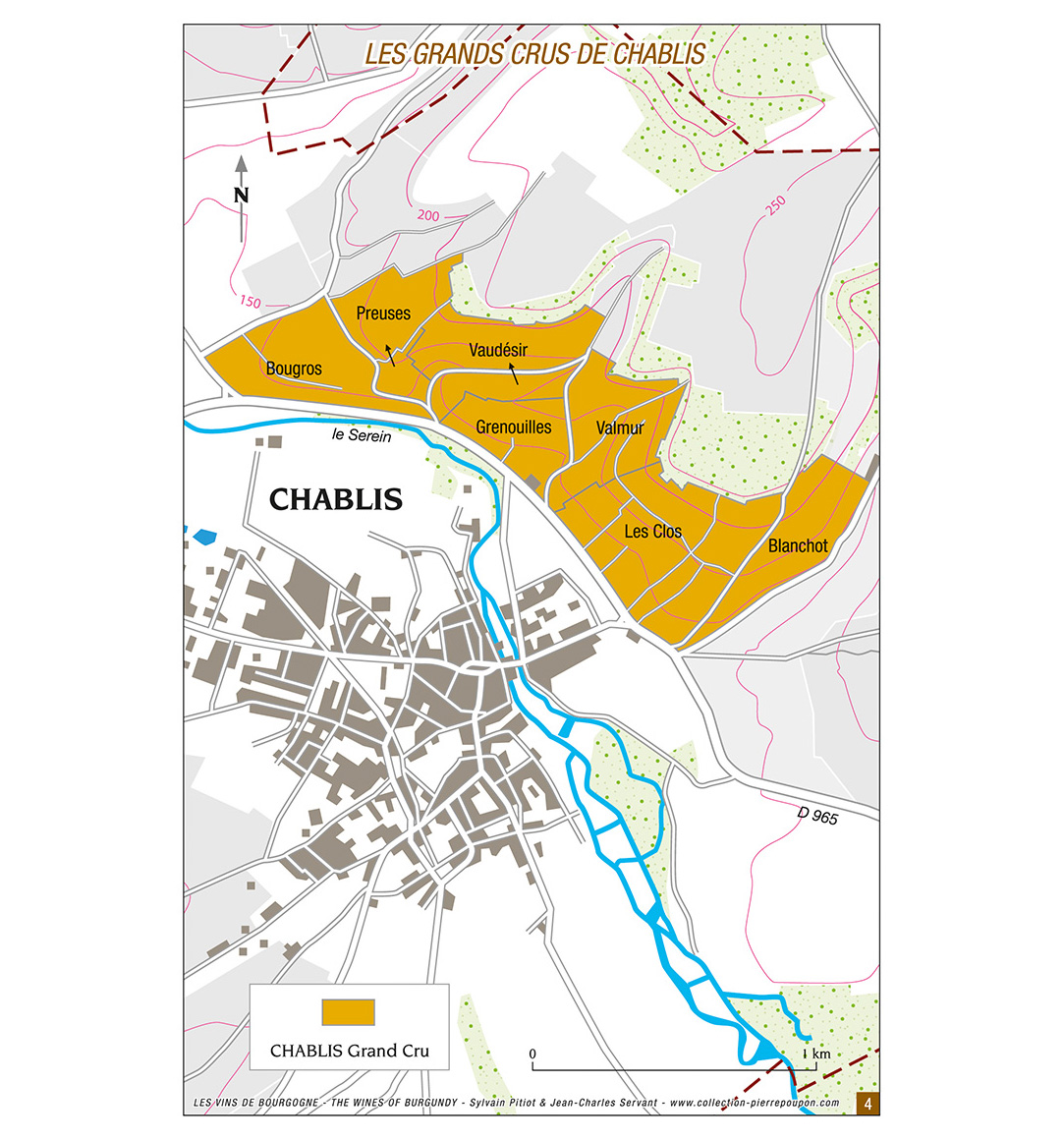
Since a law was passed in 1938, around 100 hectares of south/south-western facing vines that benefit from optimal exposure to the sun and stretch out in a crescent shape along the right bank of the Serein river are entitled to bear the Chablis Grand Cru appellation including "Les Clos", one of the seven single vineyards or “climats” that have contributed to the international reputation of the Chablis region's Great White Wines.
The very first Chablis vineyards were most likely planted in Les Clos since we can find traces of vines grown there before 1267. This single vineyard, with a surface area of 24.75 hectares is the largest of the seven prestigious Grands Crus. It is also the most uniform with a regular 200-metre south-west facing slope. Hillside terroir. Calcosol made from Portlandian and Kimmeridgian colluviums on Kimmeridgian marls.
Vinification and maturing
- Slow pneumatic pressing
- Cold static settling of the juice
- Alcoholic fermentation began in stainless steel vats After some days, 15% of the juice was transferred to fine-grained barrels to continue alcoholic fermentation The remaining juice was left in stainless steel vats for 7 to 10 days under controlled temperatures (18 to 20°C) to preserve as much fruit as possible
- 100% malolactic fermentation
- Aged on full lees for 7 months with regular stirring and pumping over of the must to lend richness.
 Vintage : 2011
2011 started with a very severe winter with extremely low temperatures and many days with snowfall. Springtime started with warm weather and higher than normal temperatures but with a lack of rainfall. At the end of March budding started in the vineyard with even some very early green shoots.�June returned to normal conditions with rain and mild temperatures. This situation allowed the vegetative progression to continue with the normal development of the young grapes.�The "veraison" or change of colour of the grapes occurred at the end of July. Summer continued with temperate weather in August but with much rainfall. September was very hot with the harvest starting with warm grape musts arriving at the cuverie and spontaneous fermentation occurring. The balance between fruit concentration and acidity permitted malolactic fermentation thus adding to the complexity of the finished wines.