


 Grape varietal
Black Gamay with white juice.
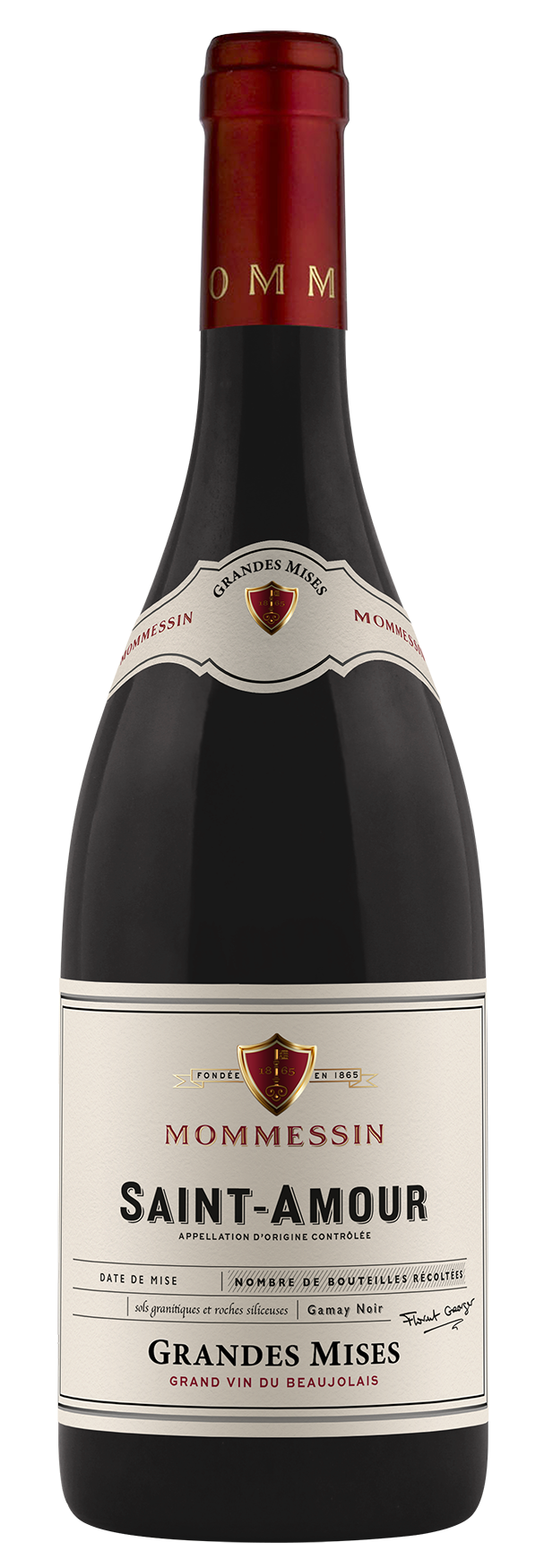
Tasting notesWith its beautiful deep ruby colour and violet reflections, this cru reveals a delicate nose with aromas of wild strawberries and spices. On the palate, the spices reappear alongside a pleasing roundness and complexity, supported by a broad and generous structure, silky tannins, and a long, lingering finish.
Serving suggestionsIt would be recommended to appreciate this wine quite fresh, between 15 and 18°C. (59-64°F.), in order to be seduced by the complexity of its aromas.
Food and wine pairingPoultry with cream and morrels pairs perfectly with this Saint-Amour.
Ageing potentialThis Saint-Amour is full of charm in its youth. It can also be aged more than 5 years.
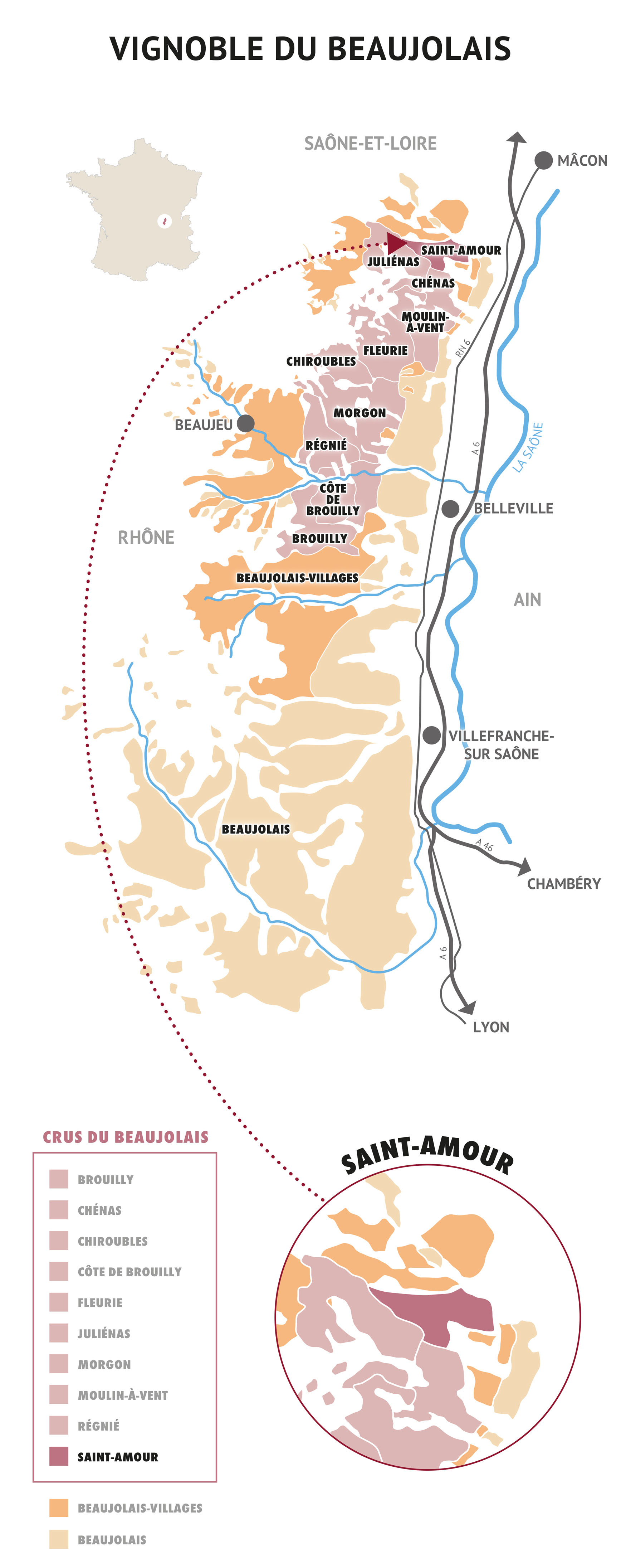
OriginsWe all recognise that this most Northern Cru bears a name which is gentle to the ear and to the heart. It is the wine of poets and lovers. If it did not exist, life would be a little less charming. The village of Saint Amour gives its name to this wine. Before that, a long time ago during Gallo-Roman times, a centurion named Amor belonging to the Thébaine Legion, stationed in the Valais region of Switzerland and famous for his Christian faith suffered martyrdom. In all evidence, the ways of lovers, with their pleasures and sorrows, are rarely easy. Today the wine of Saint Amour shows two faces, according to the soil composition and indeed the vinification technique.
TerroirThe slighty slopes are the results of a strong alteration of old rocks. The extraordinary diversity of this cru can be explained by the presence of the two juxtaposed flaws: the limestone and the granitic soils.
Vine and soilVineyard age: 47 years old.
Yield: 56 hectoliters per hectar.
A rigorous plot selection is made on single estate.
Vines are planted on sandy soil, with old pebbly soils.They are pruned « en gobelet ». They are managed with substainable farming methods. It gives a extraordinary complexity to the Gamay wine!
Vinification and maturingHand-harvested in early September 2025. Gravity-fed vatting into concrete tanks. A whole-cluster maceration was essential to highlight the wine’s structure and minerality. The maceration lasts approximately 12 to 15 days, using only pump-overs and rack-and-returns before pressing, to extract maximum structure and colour from these cuvées. The wine is then aged on fine lees, with 10% of the blend matured in barrels.
 Vintage : 2025