Varietal
Tasting notes
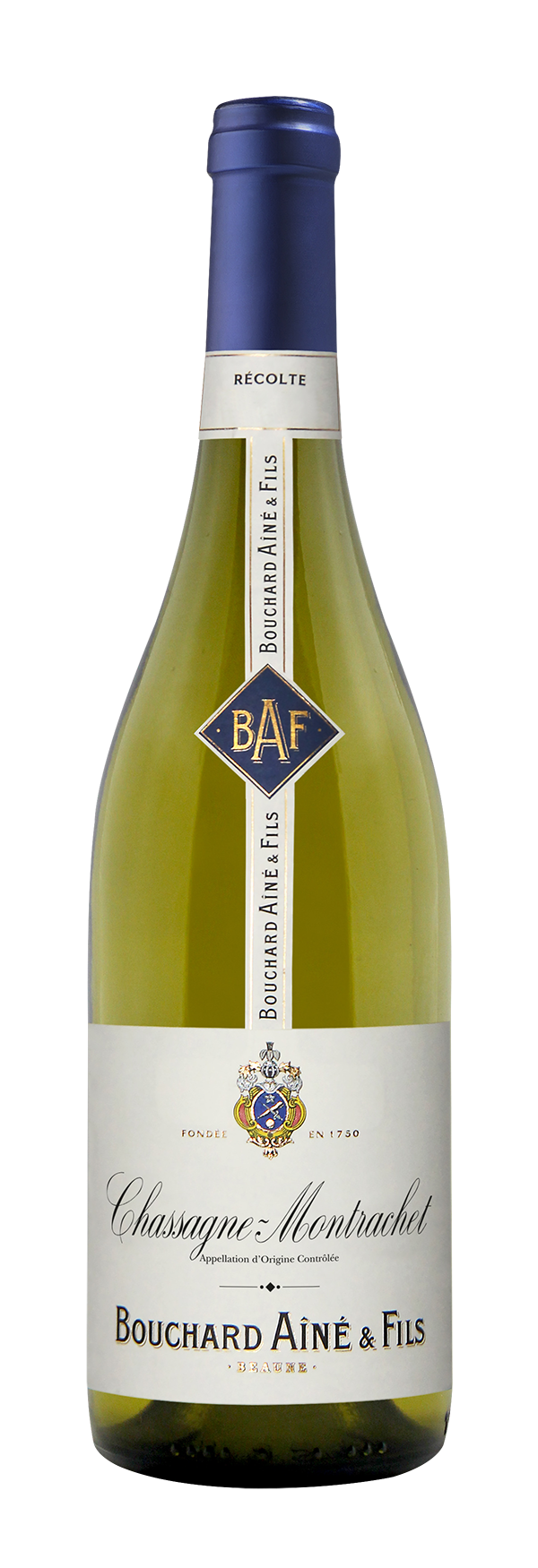
Visual: A sustained golden yellow.
Nose: A fine, spirited nose, aromatic, fruity and flowery (green apples, almonds and white flowers).
Palate: Well-balanced, supple and long. The honeyed note is particularly interesting in the context of maturing in new casks, and is in perfect harmony with the wine's full-bodied character. Chassagne-Montrachet is powerful and fat, with remarkable length. This is undoubtedly one of the world's truly greatest white wines.
Food and wine pairing
Ideal with foie-gras, a creamy fish dish, cooked meats and white meats, with or without a sauce.
Serving suggestions
Serve ideally at a temperature of 12°C to 14°C. (55°F.).
Ageing potential
Origins
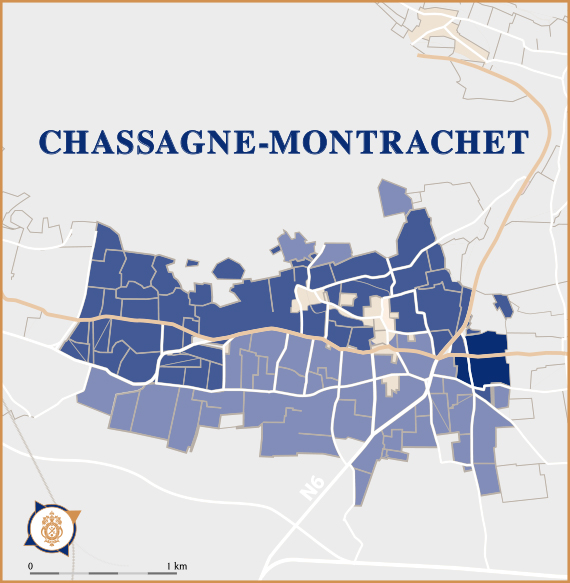
A Côte de Beaune appellation which takes its name from the village of Chassagne-Montrachet.
The vineyards extend for over 330 hectares and produce equal quantities of white and red wines.
This is one of the most highly esteemed appellations in white, for nearly half of the plots are classified as either Premier or Grand Cru, producing the greatest white wines in the world: Montrachet and Bâtard-Montrachet.
Vinification and maturing
The grapes were harvested by hand. After the pressing, a cold settling of 48 hours at 8°C. (46°F.) was made. Then the juice was placced into oak barrels: 30% new oak barrels, 40 % one year old barrels and 30 % two year old barrels for both fermentation alcoholic and malolactic. Ageing for 12 months without stirring the lees.
 Vintage : 2025
The 2025 growing season in Burgundy was marked by a rainfall deficit of around 30% compared with 2024, combined with an early harvest. The first cuts of the secateurs took place on August 25 in the Beaune Premier Cru vineyards, notably in Savigny-lès-Beaune (Clos du Roi and Marconnets).
Across the entire vineyard, harvesting began up to two weeks earlier than in 2024 and extended over a longer-than-usual period to adapt to weather conditions, which turned rainy at the outset of the harvest. All grapes were brought in on time: sanitary conditions were very good, and the fruit shows an aromatic concentration that suggests elegant, refined wines. While volumes appear stable compared to 2024, they nevertheless remain below the five-year average.
At the time of the first run-offs in mid-September, red wines were showing gentle extraction with fine colour. White wines, meanwhile, quickly revealed themselves to be rich, flavoursome and concentrated, while retaining fine freshness thanks to cool nights that preserved acidity.
In summary, 2025 is shaping up to be a vintage of character and quality, for both red and white Burgundy wines.