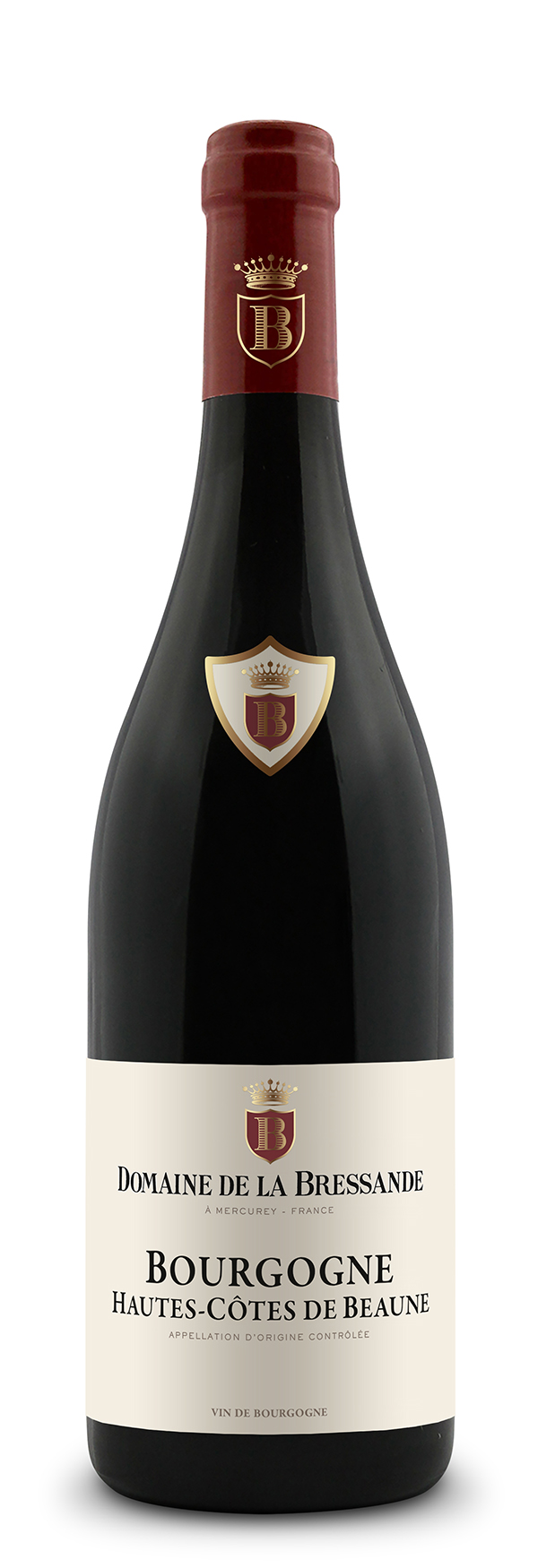


For decades, Mercurey and Rully have ranked among the most renowned appellations of the Côte Chalonnaise, considered the historic cradle of Burgundy wines. Founded in 2016, Domaine de la Bressande covers over 70 hectares of vineyards, mainly in these two emblematic villages, as well as in the Hautes-Côtes de Beaune, producing wines that combine quality, finesse, structure and elegance.
Parcel selection, yield control, sustainable vineyard management, and meticulous monitoring from vine to glass: these are all commitments to responsible and lasting viticulture. Certified HVE since the 2020 vintage, the estate has eliminated herbicides and favors biocontrol products to reduce phytosanitary inputs. The entire team is dedicated to a societal and environmental approach focused on the future.
 Grape Variety
100% Pinot Noir.
Tasting notesColour: Bright ruby red.
Nose: Aromas of red and black fruit with hints of spice and liquorice, and delicate oak.
Palate: Bold attack with flavours of cherry and blueberry. The tannins melt into the body.
Food and wine pairingBourgogne Hautes-Côtes de Beaune is the perfect accompaniment to charcuterie, terrines, duck, game such as venison, roast meats and a fine cheese platter.
Serving suggestionsServe at a temperature of 14 to 16°C. (57-61°F.).
Ageing potentialIt will keep for around 5 years in the cellar in good conditions.
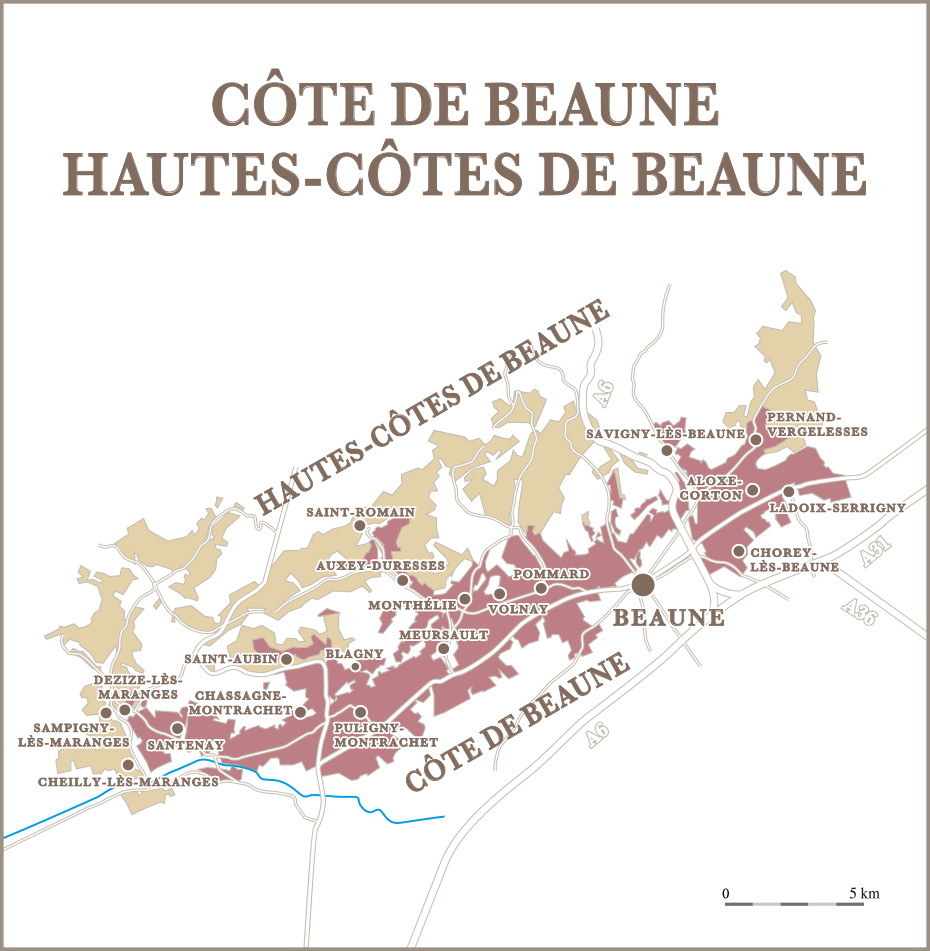
OriginSituated to the west of and parallel to the Côte de Beaune, the Hautes-Côtes de Beaune are higher hills, interspersed with faults, giving great variety to the crops and landscapes. What makes the Hautes-Côtes so special is the original way in which the vines are grown: high, wide vines that are less susceptible to frost than low vines.
The appellation covers 22 communes in Côte-d'Or and 7 communes in Saône-et-Loire. It covers an area of 943 hectares, with 720 hectares of red and rosé wines and 223 hectares of white wines.
Terroir- Clay-limestone soils with some marl formations and hillsides covered with limestone scree.
- South-east facing.
- Steep slopes.
- Altitude between 290 and 485 metres.
Vinification and maturingThe grapes are harvested by hand, sorted in the vineyard and then in the cellar before being destemmed and put into barrels.
Alcoholic fermentation takes place in open, temperature-controlled concrete vats. The cap is pumped over daily and the cap is punched down twice a day during the active phase of fermentation.
The wine is aged 40% in oak barrels (20% new barrels) and 60% in stainless steel vats for 14 months. The two parts are then blended.