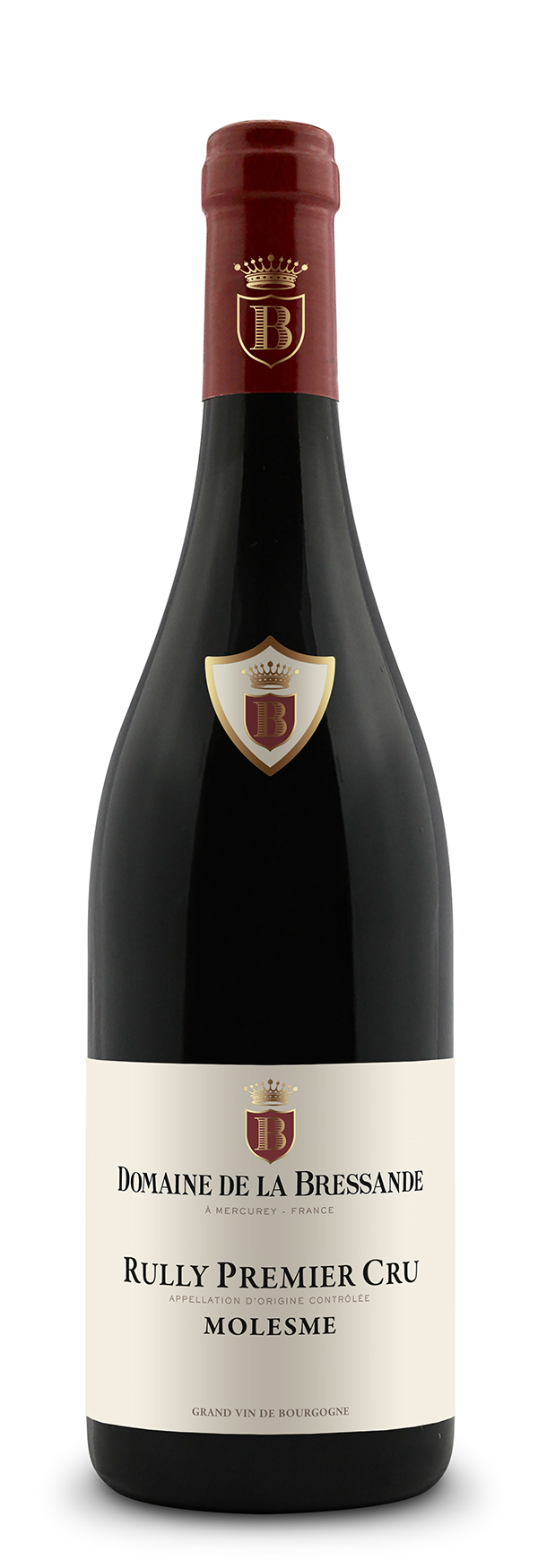


For decades, Mercurey and Rully have ranked among the most renowned appellations of the Côte Chalonnaise, considered the historic cradle of Burgundy wines. Founded in 2016, Domaine de la Bressande covers over 70 hectares of vineyards, mainly in these two emblematic villages, as well as in the Hautes-Côtes de Beaune, producing wines that combine quality, finesse, structure and elegance.
Parcel selection, yield control, sustainable vineyard management, and meticulous monitoring from vine to glass: these are all commitments to responsible and lasting viticulture. Certified HVE since the 2020 vintage, the estate has eliminated herbicides and favors biocontrol products to reduce phytosanitary inputs. The entire team is dedicated to a societal and environmental approach focused on the future.
 Grape Variety
Pinot Noir.
Tasting notesColour: Garnet-red.
Nose: The bouquet shows cherry et spices aromas carried by toasted and woody notes.
Palate: A very nice expression of the Pinot Noir finesse with cherry aromas again but also white pepper and tobacco notes.
Food and wine pairingA great companion to noble red meats, small game such as quails or pheasant, grilled or roasted beef, but also poultry in sauce or fine creamy and fresh cheeses.
Serving suggestionsServe ideally at a temperature of 15-16° C. (59-61°F.).
Ageing potential3 to 6 years.
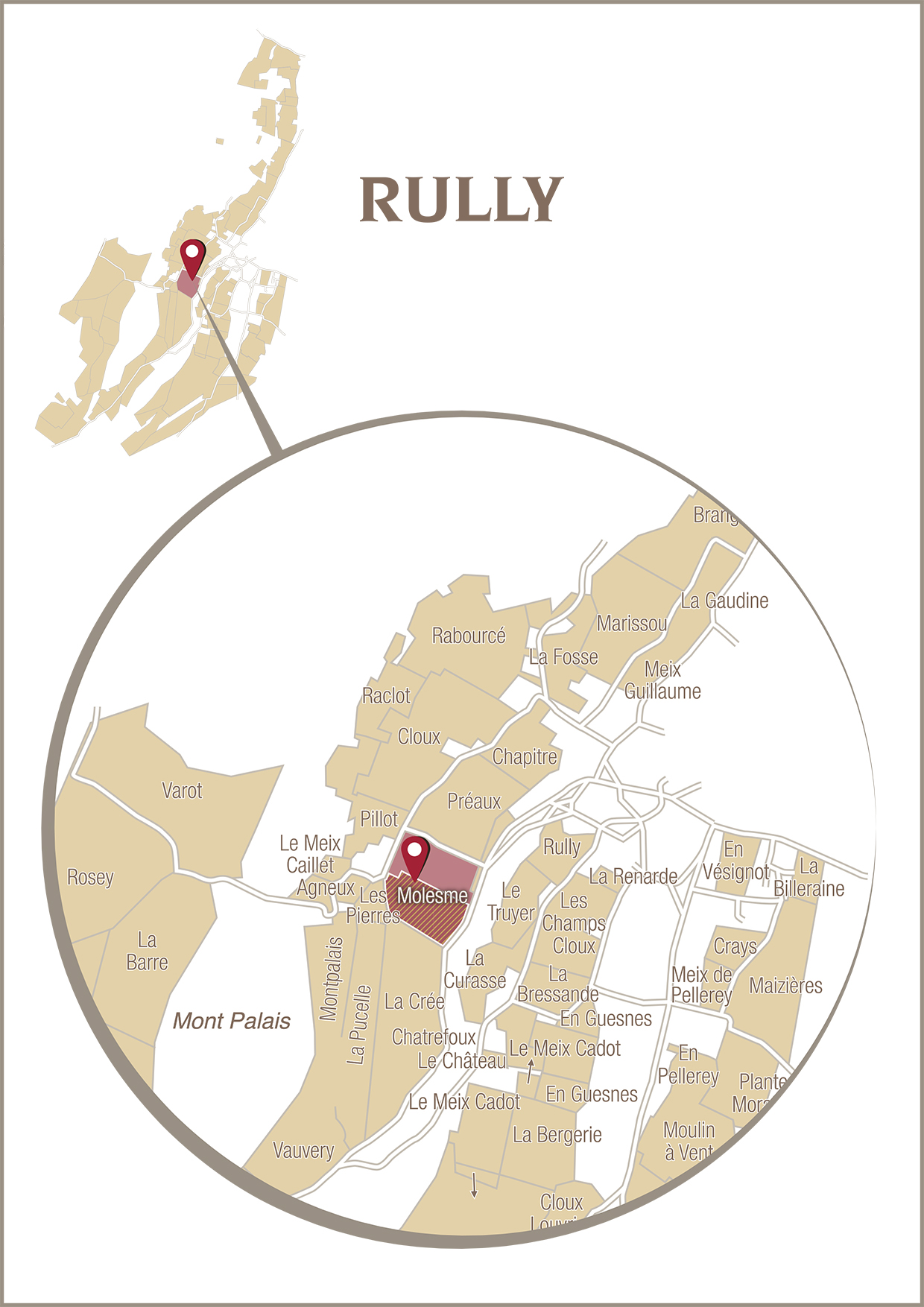
OriginRully is a communal appellation made up of 23 Premiers Crus climats. White Rullys spread on a 261 ha area - including 68 ha of Premiers Crus - whereas red Rullys are produced on a 116 ha area of which 28 are Premiers Crus.
Rully was named after a rich roman, Rubilius, who built a villa and founded the village during the roman occupation. It was at first named Rubiliacum and it evolved through the years to become the current Rully.
TerroirThe plot Molesme covers around 3 hectares of Pinot Noir vines facing east-south-east, with a flatter piedmont topography.
A plot with very generous soil that is not affected by drought. The subsoil is composed of an Oxfordian substratum of lithographic and oolitic limestone giving wines with an assertive character.
Vinification and maturingGrapes were handpicked and carefully sorted, then carried in 16 kg boxes to protect them from crush and compaction.
After being sorted again on the table at their arrival at the winery, the grapes were placed in vats for maceration during 14 to 16 days. Then a cold pre-fermentation stage came for 24 hours and the start of the vinification for around 10 to 14 days.
The vinification continued in thermo-regulated concrete vats with daily pumping over and very few pigeages (cap punching placed at the beginning of fermentation).
Then, the wine was aged for 8 months in oak barrels with 25% new oak.
Light filtration before bottling.
 Vintage : 2024