VARIETAL
100% Pinot Noir.
TASTING NOTESColour: Dark ruby .
Nose: Small red and black berries, spices and toasted woody notes.
Palate: Complex, this is a supple, fairly full-bodied wine. Ripe fruit and gamey aromas develop with age.
FOOD AND WINE PAIRINGIts supple character calls for grilled or roasted red or white meats, game birds or fine cheeses.
SERVING SUGGESTIONSServe at a temperature of 15-16°C (60°F).
AGEING POTENTIALThis wine can be enjoyed now, but can be kept for 5 to 10 years.
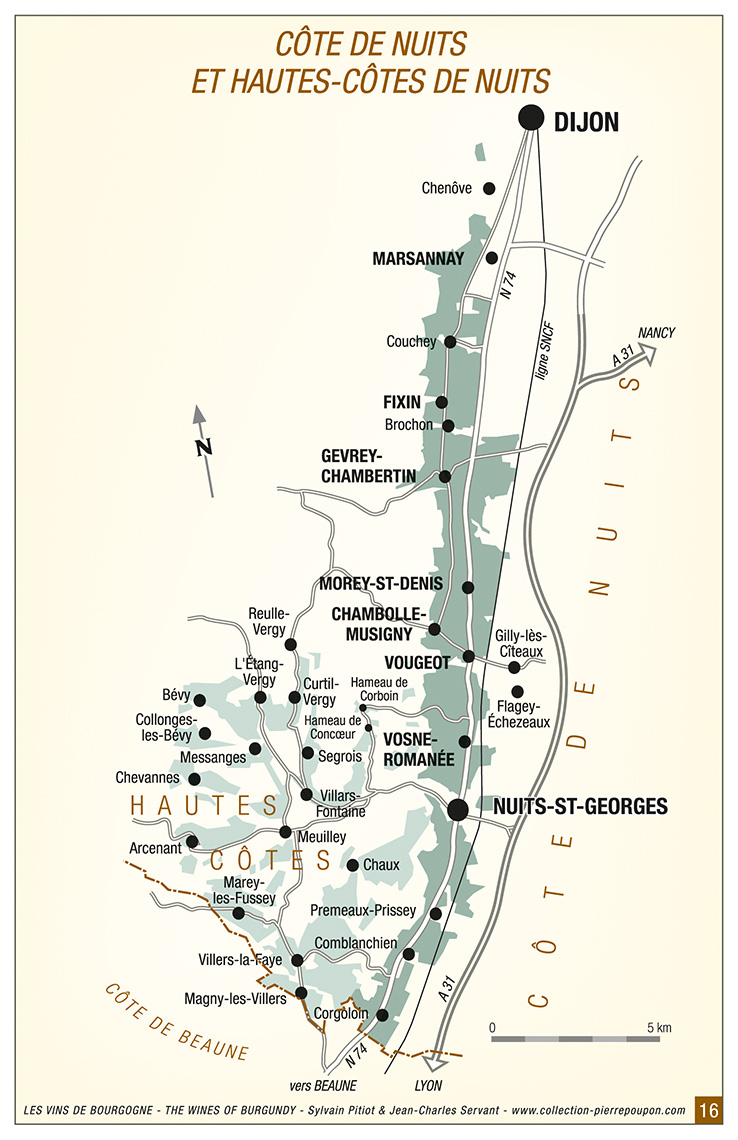
ORIGINThe village appellation is divided into two parts: to the north, covering Fixin and Brochon, and to the south, encompassing Premeaux-Prissey, Comblanchien and Corgoloin, the latter marking the boundary between the Côte de Nuits and Côte de Beaune vineyards. The total surface area is 165 hectares (only 10 hectares devoted to white wines). The hillsides of Comblanchien and Corgoloin are composed of hard Bathonian limestone, forming gentle slopes with brown soils poor in limestone at the top. Scree deposits create stony slopes which continue with brown soils overlying silts at the base. The terroirs of Fixin and Brochon, on the other hand, are underlain by reddish-brown piedmont soils mixed with limestone debris.
VINIFICATION AND MATURINGThe grapes are harvested by hand and completely destemmed, followed by an eight-day cold pre-fermentation maceration in concrete vats at 8°C. Alcoholic fermentation, carried out with selected yeasts, continues for ten days. The grapes are gently pressed and the juices are blended in stainless steel vats to decant the coarse lees. The clear juice and fine lees are aged for eight months in barrels, 30% of which are new (French and American oak). Malolactic fermentation occurs naturally thanks to the bacteria present in the wine, ensuring structure, complexity and aromatic finesse.
 Vintage : 2022